Watercolor washes are one of the first things to learn, and they’re the base of so many paintings. They’re also a really nice way to get a feel for how water and pigment move together.
These three washes—flat, graded, and variegated—are simple, but they teach you a lot just by practicing them.
Flat Wash
A flat wash is an even layer of one color across the page.
How to do it:
Load your brush with paint and water
Apply it in smooth strokes across the paper
Try to keep the color consistent as you go
Tip: Work while the paint is still wet so everything blends together evenly.
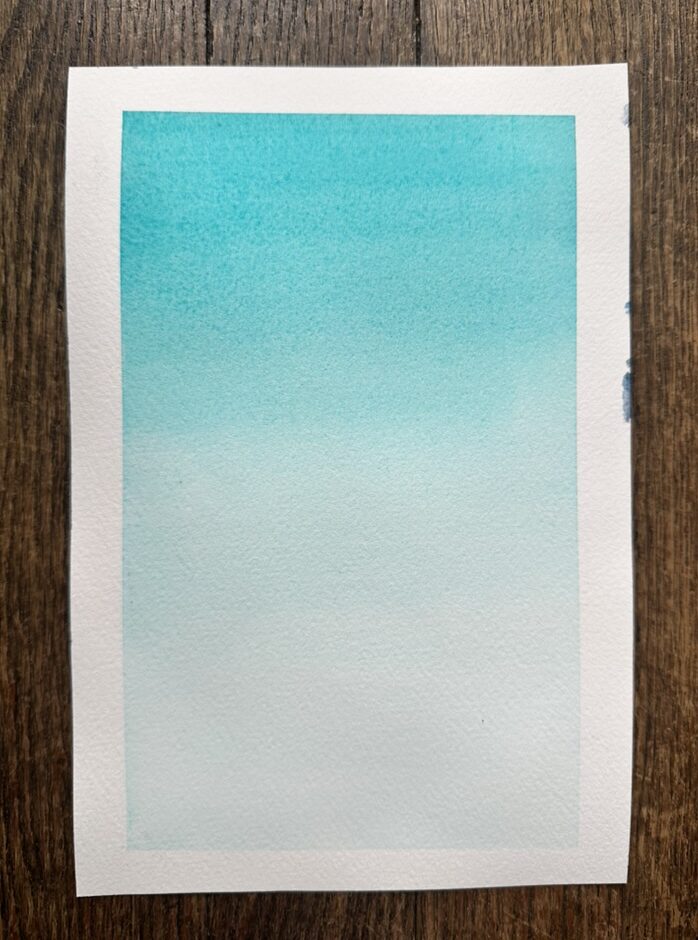
Graded Wash
A graded wash fades from dark to light.
How to do it:
Start with more pigment at the top
As you move down, add a little water to your brush
Let the color gradually get lighter
Tip: Rinse your brush slightly between strokes to keep the transition soft.
Variegated Wash
A variegated wash is when you blend two (or more) colors together.
How to do it:
Lay down one color
While it’s still wet, drop in another color
Let them mix naturally on the paper
Tip: Try not to overwork it—this one looks best when you let it do its thing.
You don’t have to get these perfect. Just practicing them will help you understand watercolor a lot more.
Start with the one that feels easiest and go from there.